
Planning Indoor Sports Games for Every Group
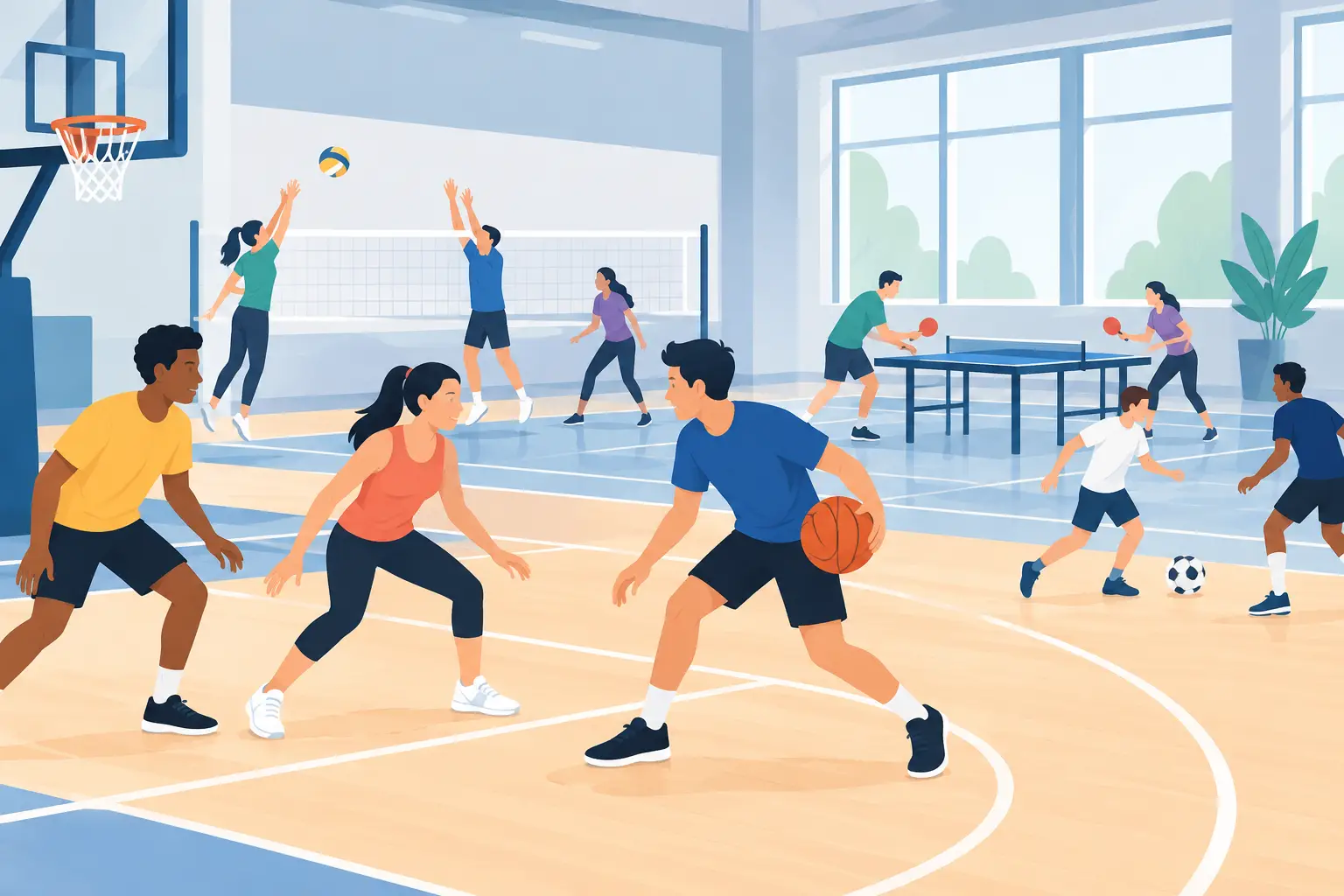
A rainy birthday weekend does not have to mean a living room full of restless kids or adults checking the forecast every 10 minutes. Planning indoor sports games gives your group a built-in way to move, laugh, compete, and spend real time together, without relying on perfect weather.
For a family getaway, team trip, reunion, or kids birthday party, the best games are not necessarily the most complicated ones. They are the ones that fit the people in the room, use the available space well, and leave plenty of time for snacks, swimming, conversation, and relaxing.
Start With the Space You Have
An indoor court changes what is possible. Instead of clearing furniture and hoping nothing gets knocked over, you can organize games that feel like a real activity instead of a backup plan. Basketball and pickleball are easy choices, but a court can also work for relay races, shooting contests, skill challenges, and team games that get everyone involved.
Before choosing games, think about the group itself. A party of eight active teenagers can handle a fast-paced tournament. A reunion with grandparents, younger children, and adults may be happier with short rounds, flexible teams, and games where everyone gets a chance to participate without running full speed.
The goal is not to schedule every minute. A good indoor game plan gives people a reason to gather, then lets the day breathe. Leave room for guests to take breaks, cheer from the sidelines, grab food, or join the next round.
Planning Indoor Sports Games by Age and Energy Level
One-size-fits-all games can leave either the younger kids overwhelmed or the adults sitting out. A little adjustment keeps the energy fun for everyone.
For kids birthday parties
Keep instructions short and rounds even shorter. Kids generally want to start playing right away, so choose games they understand in a minute or two. A basketball shooting challenge, dribbling relay, pickleball target game, or team scavenger-style race around designated areas can work well.
Make the competition light. Give everyone a chance to earn points for effort, teamwork, or a funny moment, not just athletic ability. For younger kids, use a closer shooting line or let them bounce the ball before catching it. Small changes prevent the most coordinated child from winning every activity.
A simple party flow works especially well: welcome guests, play one active game, pause for food or cake, then return for a second activity. If the group is also using an indoor pool, schedule court time and pool time separately. That helps avoid wet floors, keeps supervision easier, and gives kids something exciting to look forward to after the first round of games.
For families and mixed-age groups
Mixed ages call for games with options. In pickleball, pair stronger players with beginners or create rotating doubles teams. In basketball, try HORSE, Around the World, free-throw contests, or a passing game rather than a full competitive game.
Relays are another good fit, as long as they are not all about speed. Build a course with a dribble, a pass into a target, a balance task, or a simple trivia question before the next teammate goes. The variety lets different people contribute in different ways.
For friend groups and sports travelers
Adults and older teens may enjoy a more organized bracket, especially if your group is already traveling for a tournament, Notre Dame weekend, or a team event. Keep it simple: set a clear start and finish time, make teams even, and use short games to a set number of points.
Pickleball is especially useful when abilities vary because it is social, quick to learn, and easy to rotate. A winner-stays-on format can be fun, but only if you set a maximum number of consecutive games so no one gets stuck waiting too long.
Choose Games That Keep Waiting Time Low
The biggest enemy of a great group activity is a long line. If only one person is shooting or playing at a time, the people waiting will lose interest quickly. Choose formats that keep as many guests engaged as possible.
For basketball, divide into stations. One group can work on a shooting challenge while another runs a dribbling relay or plays a short half-court game. Rotate every 10 to 15 minutes. For pickleball, doubles matches and quick rotations make it easy to include more people.
If your group is large, set up a simple score sheet and assign one adult or older teen to keep things moving. This does not need to feel formal. A clipboard, a marker board, or even a piece of paper on the counter is enough. Clear scoring prevents debates and keeps the fun focused on the game.
Avoid eliminating players too early. Knockout-style games can be exciting, but they are frustrating when a child is out after one turn. If you use elimination, add a second-chance round or a sideline role such as scorekeeper, music picker, or cheer captain.
Set Rules Before the First Whistle
Indoor sports are more enjoyable when everyone knows the boundaries. Take two minutes before play begins to cover the basics: which areas are in play, how teams rotate, what counts as a point, and when a round ends.
Safety deserves the same quick attention. Make sure players wear shoes that work for the court, remove loose items from play areas, and keep food and drinks off the court. If younger children are involved, designate an adult to supervise rather than assuming the group will naturally self-manage.
It also helps to decide how competitive the event should be. Some groups love a final championship game and playful bragging rights. Others are there for a laugh and would rather switch teams every round. Neither approach is wrong. Match the rules to the mood of the group, not to the sport itself.
Build in Breaks That Feel Like Part of the Fun
A full day of indoor activities can become exhausting if every moment feels scheduled. Plan for natural pauses between games. Food, birthday cake, pool time, board games, or simply hanging out in a comfortable living area can reset the group before the next activity.
For overnight groups, this is one reason a whole-home stay works so well. Guests do not have to pack up and drive somewhere else when a game ends. They can move from the court to the kitchen, relax in the living spaces, or settle in for the evening while the next group takes a turn playing.
At Wiseman House, groups can combine an indoor basketball and pickleball court with an indoor heated pool, spacious gathering areas, and room for everyone to stay together. That flexibility is especially helpful when the weather is cold, wet, or simply not part of your plan.
Keep Equipment Simple and Have a Backup Game
You do not need a truckload of gear to create a memorable game day. Basketballs, pickleball paddles and balls, cones or tape for simple markers, and a timer cover a lot of possibilities. For younger children, softer balls or larger targets can make activities easier and safer.
Have one backup game ready in case the first choice does not click. Maybe the group arrives tired from travel, the kids are younger than expected, or the competitive players take things too seriously. A quick shooting game, team relay, or low-pressure skill challenge can save the moment without making anyone feel like the plan failed.
The best gatherings are not the ones with a perfect schedule. They are the ones where guests have room to enjoy each other. Pick two or three games your group will genuinely want to play, keep the rules friendly, and let the indoor fun become the part of the trip everyone talks about on the way home.